
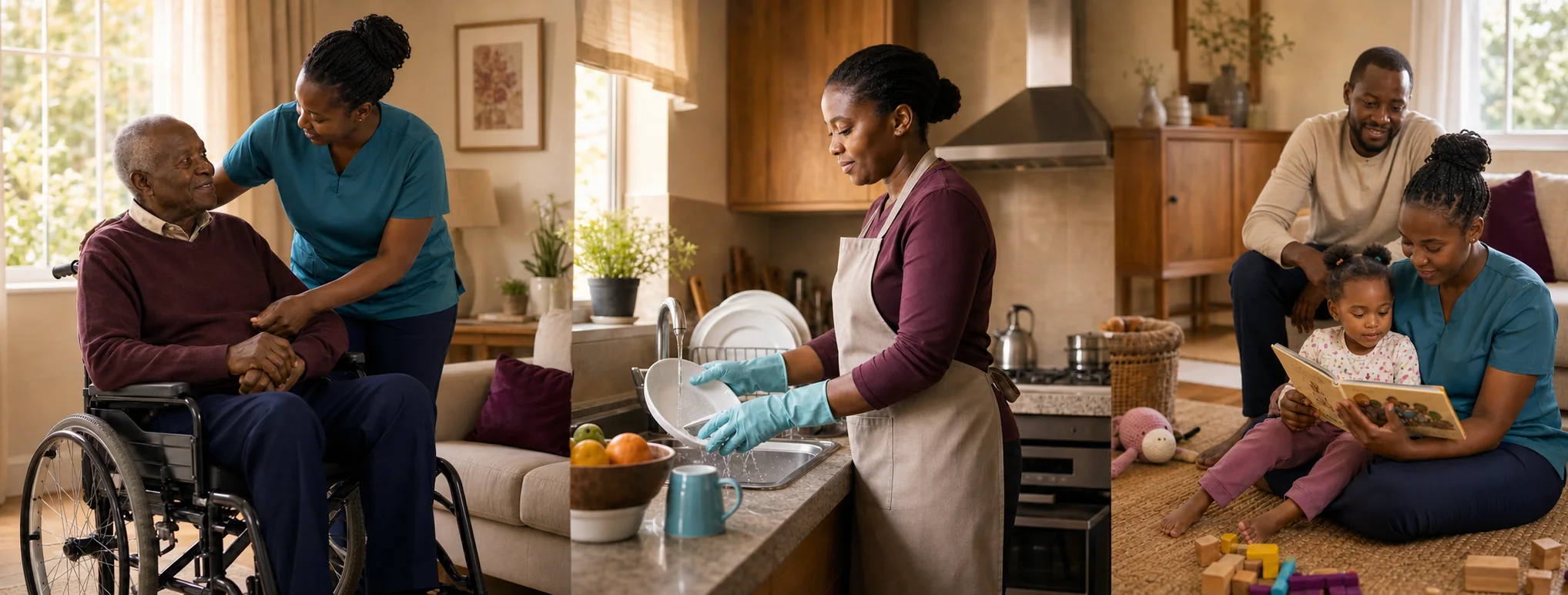
Start with the person receiving care
Write down the support needed during a normal day: mobility, meals, medication reminders, companionship, appointments and personal routines. Separate essential care needs from preferences so interviews stay focused.
Ask for examples, not promises
Invite candidates to explain how they handled a difficult moment, communicated a change or protected an older person’s dignity. Specific examples reveal judgement better than yes-or-no answers.
Agree on the working relationship
Clarify duties, hours, rest days, communication, household boundaries and who makes care decisions. A clear role protects the caregiver, the family and the person receiving support.
Use a careful placement process
Identity, experience and reference checks should match the role. Double M combines screening information with human interviews; a match score may assist but never makes the final decision.